You can hire a ghostwriter for a book and have a polished, publish-ready manuscript — without writing a single word yourself. The key is knowing where to look, what to ask, and how to protect your investment.
In this guide, you’ll learn:
- Where to find qualified ghostwriters (and how much they charge)
- How to evaluate writing samples, spot scams, and match your voice
- What your ghostwriting contract must include
- The modern alternative that’s replacing traditional ghostwriting for most authors
Here’s how to hire the right ghostwriter for your book.
What Is a Ghostwriter?
A ghostwriter is a professional writer you hire to write your book under your name. You provide the ideas, expertise, or story — they turn it into a finished manuscript. You keep full credit as the author.
Ghostwriters work across every genre and format. Memoirs, business books, self-help guides, novels, children’s books — if someone’s name is on a cover, there’s a chance a ghostwriter helped create it. According to the Editorial Freelancers Association, ghostwriting is one of the highest-paid editorial services in publishing.
The arrangement is straightforward. You pay the ghostwriter a fee. They write the book. You own the finished work. Their involvement stays confidential unless you choose to credit them.
How Much Does It Cost to Hire a Ghostwriter?
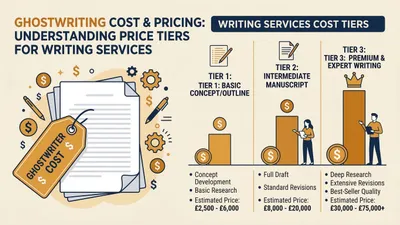
Hiring a ghostwriter for a book typically costs between $5,000 and $100,000+, depending on the writer’s experience, your book’s length, and the genre.
Here’s a realistic breakdown:
| Experience Level | Price Range | What You Get |
|---|---|---|
| Entry-level freelancer | $5,000–$15,000 | Basic manuscript, limited revisions |
| Mid-career professional | $15,000–$40,000 | Polished draft, voice matching, 2-3 revision rounds |
| Established ghostwriter | $40,000–$75,000 | Full-service collaboration, developmental input |
| Celebrity/bestseller tier | $75,000–$250,000+ | A-list talent, guaranteed quality |
A few things push costs higher: tight deadlines, heavy research requirements, and specialized subject matter (medical, legal, technical). Fiction ghostwriting also runs higher than nonfiction because it requires original plotting, character development, and creative storytelling.
For a full pricing breakdown, see our complete ghostwriter cost guide. You can also compare ghostwriting services rates across different providers.
Our Pick — Chapter
If the cost of traditional ghostwriting feels steep, Chapter lets you write your own book with AI-powered assistance for a one-time $97 fee. Over 10,000 authors have used it to create books — including titles featured in USA Today and the New York Times.
Best for: Authors who want to keep creative control while getting AI help with drafting, outlining, and editing Pricing: $97 one time, 2 books included (fiction or nonfiction), 30-day money-back guarantee Why we built it: Most people who want a book don’t actually need a ghostwriter — they need the right writing tool.
Types of Ghostwriters: Which Do You Need?
Not all ghostwriters offer the same service. Understanding the types helps you hire the right fit.
Full-service ghostwriters handle everything from research and interviews through final manuscript delivery. You provide your ideas and source material — they do the rest. This is the most common (and most expensive) arrangement.
Collaborative ghostwriters work alongside you more closely. You might draft certain sections while they write others, or you contribute rough content that they reshape into polished prose. This hybrid approach costs less and keeps you more involved.
Developmental ghostwriters focus on structure and story. They might outline your entire book, write key chapters, and guide you through drafting the rest. Common for memoir writing where the author’s raw stories need professional shaping.
Specialty ghostwriters focus on specific genres or industries. Medical ghostwriters, business book ghostwriters, children’s book ghostwriters, and fiction ghostwriters each bring domain expertise that generalists lack.
Choose your type based on how much involvement you want and how much you can invest.
Where to Find Ghostwriters for Hire
Finding the right ghostwriter means knowing where to look. Each source has trade-offs in cost, quality, and convenience.
Freelance Marketplaces
Platforms like Upwork, Fiverr, and Freelancer let you post a project and receive proposals from ghostwriters worldwide. Rates vary wildly — from $500 for a short ebook to $50,000+ for a premium book.
Pros: Large talent pool, price competition, escrow protection Cons: Quality is inconsistent, vetting falls on you, communication barriers
Ghostwriting Agencies
Agencies like Gotham Ghostwriters, Kevin Anderson & Associates, and other ghostwriting services handle the matching process for you. They screen writers, manage timelines, and guarantee delivery.
Pros: Vetted talent, project management, accountability Cons: Higher cost (agency markup), less direct writer access
Professional Writer Networks
Reedsy is the strongest option here — a curated marketplace of publishing professionals with verified credentials and client reviews. The Editorial Freelancers Association and the Association of Ghostwriters also maintain searchable directories.
Pros: Pre-vetted professionals, publishing industry connections Cons: Premium pricing, smaller pool
Referrals and Writing Communities
Ask published authors, literary agents, or writing coaches for recommendations. Writing conferences and author communities (like those on Facebook or Reddit’s r/ghostwriting) also surface qualified candidates.
For affordable ghostwriting options, you can also explore hybrid approaches that combine AI tools with human editing.
What to Look for When Hiring a Ghostwriter
Not every ghostwriter is the right fit. Here’s what separates a great hire from a costly mistake.
Genre Experience
A ghostwriter who excels at business books may struggle with memoir. Ask specifically about their experience in your genre. Have they written books similar to yours? Can they show published examples?
If you’re writing nonfiction, look for someone with a track record in your subject area. Our guide to writing a nonfiction book covers the specific skills nonfiction demands.
Voice Matching Ability
The best ghostwriters disappear into your voice. During initial conversations, pay attention to whether they ask about your tone, vocabulary, and communication style. A ghostwriter who doesn’t ask these questions won’t capture your voice.
Request a paid writing sample (1,000–2,000 words) based on your material. This is the single most important step in the hiring process. Never skip it.
Portfolio and References
Ask for:
- Published samples in your genre
- Client testimonials or references you can contact
- Before/after examples showing their editorial range
Check whether their published work matches the quality you expect for your book.
Process Clarity
A professional ghostwriter should explain their process clearly before you sign anything:
- How do they handle research and interviews?
- How many revision rounds are included?
- What’s the milestone and payment schedule?
- How do they handle disagreements about direction?
If they can’t articulate their process, they probably don’t have one.
Availability and Timeline
Good ghostwriters are booked months in advance. Ask about their current availability and realistic timeline for your project. A 60,000-word book typically takes 4–9 months with a professional ghostwriter.
If you need a faster turnaround, consider AI-powered writing tools that can help you produce a first draft in weeks instead of months.
Questions to Ask a Ghostwriter Before Hiring
Before you sign a contract, interview your top candidates with these questions. Their answers reveal whether they’re the right fit.
About their experience:
- How many books have you ghostwritten in my genre?
- Can you share published samples (even if you can’t name the client)?
- What’s your biggest ghostwriting success story?
About the process:
- How do you capture my voice and tone?
- What does your interview/research process look like?
- How do you handle it when the client and writer disagree on direction?
About logistics:
- What’s your realistic timeline for a book of this length?
- How many revision rounds are included in your fee?
- What’s your preferred communication cadence and format?
About the business side:
- Do you use a standard contract, and can I review it before committing?
- What’s your payment structure (milestones vs. flat fee)?
- Do you require an NDA, or do you have your own?
A confident, experienced ghostwriter will answer these clearly without hesitation. Vague or evasive answers are a red flag.
The Ghostwriter Hiring Process: Step by Step
Follow this process to hire with confidence.
Step 1: Define Your Book Project
Before reaching out to ghostwriters, get clear on:
- Book concept: What’s the book about? Who’s the audience?
- Length: How many words? (Most books run 40,000–80,000 words.)
- Timeline: When do you need the finished manuscript?
- Budget: What can you realistically spend?
- Materials: What do you already have — outlines, notes, recordings, research?
The more clarity you bring, the better proposals you’ll receive.
Step 2: Create a Project Brief
Write a 1-2 page brief that includes your book concept, target audience, comparable titles, desired tone, and any existing materials. This gives ghostwriters enough information to write meaningful proposals.
A strong brief also signals that you’re a serious client — which attracts better talent. If you need help structuring your ideas, a book outline template can help you organize before outreach.
Step 3: Reach Out to 3-5 Candidates
Don’t hire the first ghostwriter you find. Contact at least 3-5 candidates and compare:
- Their understanding of your project
- Proposed approach and timeline
- Pricing and payment structure
- Communication style
Schedule a video or phone call with each. Chemistry matters — you’ll work together for months.
Step 4: Request a Paid Writing Sample
This is non-negotiable. Give each finalist the same brief (a chapter outline or key section) and pay them for a 1,000–2,000 word sample.
Compare the samples for:
- Voice match: Does it sound like you?
- Quality: Is the prose clean and engaging?
- Understanding: Did they grasp your core message?
Budget $200–$500 per sample. It’s the cheapest insurance against a bad hire.
Step 5: Negotiate and Sign a Contract
Once you’ve chosen your ghostwriter, formalize everything in a written contract. Don’t rely on handshake agreements — ever.
What Your Ghostwriting Contract Must Include
A solid ghostwriting contract protects both parties. Here are the non-negotiable elements.
Intellectual property and credit. The contract should explicitly state that you own all rights to the finished manuscript. Decide upfront whether the ghostwriter receives any credit. There’s a direct tradeoff between credit and compensation — ghostwriters who accept co-author credit (like “by You with Ghostwriter”) typically charge less than those who remain fully anonymous.
Payment structure. Most ghostwriting contracts use milestone-based payments:
- 25-30% upfront deposit
- 25-30% at the midpoint (e.g., first half of manuscript)
- Remaining balance on delivery of the final draft
Never pay 100% upfront. Milestone payments keep both sides motivated.
Revision rounds. Specify exactly how many revision rounds are included (2-3 is standard). Additional revisions beyond the agreed number should have a clear per-round fee.
Timeline and milestones. Include specific deadlines for each deliverable — outline, first draft, revised draft, final manuscript. Build in buffer time for your review periods.
Confidentiality (NDA). If you want the ghostwriter’s involvement kept private, include a non-disclosure agreement. This is standard practice in professional ghostwriting. See our ghostwriter NDA template for a starting point.
Kill clause. Include terms for ending the collaboration early if things aren’t working. Define what happens to completed work and payments in that scenario.
For more on protecting your finished book, see our guide to book copyright registration.
How to Spot Ghostwriting Scams
The ghostwriting industry attracts scammers who target first-time authors. According to Writer Beware, ghostwriting scams are among the most commonly reported publishing fraud. Here’s how to protect yourself.
Watch for these red flags:
- Unrealistic pricing. A complete book for $500–$1,500 is almost always a scam or AI-generated content farmed out overseas with no quality control.
- Pressure to pay upfront in full. Legitimate ghostwriters use milestone-based payments. Anyone demanding full payment before starting is a warning sign.
- Stock photo “team” pages. Scam ghostwriting companies populate their websites with fake staff profiles using stock photos. Reverse image search any headshot that looks too polished.
- Plagiarized testimonials and portfolios. Some companies copy testimonials and book covers from legitimate ghostwriters. Cross-reference their claimed work.
- No named writers. If a company refuses to tell you who will actually write your book, walk away. You deserve to vet the person doing the work.
- Guarantees of bestseller status. No ghostwriter can guarantee your book will become a bestseller. That’s not how publishing works.
- Aggressive sales pressure. Legitimate ghostwriters don’t pressure you to sign on a phone call. If you feel rushed, that’s a red flag.
How to verify a ghostwriter:
- Search their name + “ghostwriter” + “reviews” online
- Ask for verifiable client references (not just testimonials on their site)
- Check if they’re a member of the Association of Ghostwriters or similar professional organizations
- Request a paid sample before committing to the full project
- Trust your instincts — if something feels off, it probably is
How to Manage the Ghostwriting Collaboration
Hiring the ghostwriter is just the beginning. Managing the collaboration determines whether you get a great book or a mediocre one.
Set Clear Communication Expectations
Agree on:
- Communication frequency (weekly check-ins are standard)
- Preferred channels (email, video calls, shared docs)
- Response time expectations (both sides)
- Feedback format (inline comments, summary notes, recorded audio)
Provide Thorough Source Material
The more material you give your ghostwriter, the better the result. Provide:
- Outlines, notes, and research
- Recorded interviews or conversations (many ghostwriters prefer to interview you)
- Reference books in your genre or style
- Sample chapters or previous writing
A ghostwriter can only work with what you give them. If you need help organizing your ideas first, writing a book proposal forces you to clarify your concept before the ghostwriting begins.
Give Constructive, Specific Feedback
“I don’t like it” helps no one. Instead:
- Point to specific passages that don’t work
- Explain why they miss the mark
- Provide examples of what you’re looking for
- Focus on pattern-level feedback, not line-by-line nitpicks
Great feedback makes revision faster and the final product stronger.
Trust the Process
Your ghostwriter is a professional. Give them room to do their job. Micromanaging every sentence slows the project and produces worse writing. Focus your energy on big-picture direction — tone, message, structure — and let the writer handle the craft.
Ghostwriter vs. AI Writing Tools: Which Is Right for You?
The traditional ghostwriting model is changing fast. AI ghostwriting tools now let authors produce book-length manuscripts at a fraction of the cost and timeline.
Here’s how they compare:
| Factor | Traditional Ghostwriter | AI Writing Tool (Chapter) |
|---|---|---|
| Cost | $5,000–$100,000+ | $97 one-time |
| Timeline | 4–9 months | 2–6 weeks |
| Creative control | Limited — you review drafts | Full — you guide every section |
| Voice matching | Depends on writer skill | You write in your own voice |
| Revisions | 2-3 rounds included | Unlimited |
| Best for | Hands-off authors, celebrity books | Authors who want to write their own book faster |
A traditional ghostwriter makes sense when you have zero interest in writing and a healthy budget. But if you have the ideas and want to maintain control, AI tools give you the scaffolding to write the book yourself.
Over 10,000 authors have used Chapter to create their books — with one client generating $60K in revenue within 48 hours of publishing and another landing a speaking gig for 20,000 people.
For a deep dive into AI-powered alternatives, see our guide to the best AI apps to write a book.
Common Mistakes When Hiring a Ghostwriter
Avoid these pitfalls and you’ll save thousands of dollars and months of frustration.
- Hiring on price alone. The cheapest ghostwriter is almost never the best value. A $3,000 manuscript you have to rewrite costs more than a $15,000 one that’s publish-ready.
- Skipping the paid writing sample. This is the #1 mistake. Never hire based on a proposal or portfolio alone — always request a sample based on your specific project.
- No written contract. Verbal agreements lead to disputes about scope, rights, and payments. Get everything in writing.
- Not checking references. Talk to at least two previous clients. Ask about communication, deadline adherence, and final quality.
- Unclear expectations. If you can’t articulate what you want, your ghostwriter can’t deliver it. Do the prep work before hiring.
- Paying everything upfront. Milestone-based payments protect you if the relationship doesn’t work out.
- Ignoring the NDA. Without a confidentiality agreement, your ghostwriter could publicly claim credit for your book.
How Long Does It Take to Write a Book With a Ghostwriter?
Working with a ghostwriter typically takes 4 to 9 months from kickoff to final manuscript, depending on book length, research requirements, and revision cycles.
Here’s a typical timeline:
- Month 1: Interviews, research, outline development
- Months 2-4: First draft writing
- Month 5: First round of revisions based on your feedback
- Month 6: Second revision round and polish
- Months 7-9: Final edits, fact-checking, delivery
If you need your book faster, AI writing tools can compress that timeline dramatically. Many authors complete their first draft in 2-4 weeks using AI assistance.
For more on realistic book timelines, see how long it takes to write a book.
Should You Hire a Ghostwriter or Write It Yourself?
This is the real question. And the answer depends on three things.
Your time. If you’re a busy executive, physician, or entrepreneur with zero writing time, a ghostwriter makes sense. If you can carve out 1-2 hours daily, you can write your own book — especially with AI tools.
Your budget. Traditional ghostwriting is a serious investment. If $20,000–$50,000 is within reach, you’ll get a professional result. If not, affordable alternatives exist that deliver comparable quality.
Your involvement preference. Some authors want to hand off the project completely. Others want creative control over every chapter. If you’re the second type, hiring a ghostwriter may lead to frustration — you’d be better off writing with AI support.
The honest answer for most people: you don’t need a ghostwriter. You need a system that helps you get your ideas onto the page efficiently. That’s exactly what Chapter was built to do.
FAQ
How much does it cost to hire a ghostwriter for a book?
Hiring a ghostwriter for a book costs between $5,000 and $100,000+ in 2026. Mid-range professional ghostwriters typically charge $15,000–$40,000 for a full-length manuscript. Pricing depends on the writer’s experience, book length, genre complexity, and revision rounds included.
How do I find a reputable ghostwriter?
You can find a reputable ghostwriter through curated marketplaces like Reedsy, professional organizations like the Editorial Freelancers Association, or referrals from published authors. Always request a paid writing sample, check client references, and verify published work before signing a contract.
Do ghostwriters get credit for the book?
Ghostwriters typically do not receive public credit for the book. The author retains full byline. However, some agreements include co-author credit (e.g., “by Author with Ghostwriter”) in exchange for a reduced fee. Credit arrangements should be specified in the ghostwriting contract.
Can I hire a ghostwriter for a fiction book?
Yes, you can hire a ghostwriter for fiction books including novels, short story collections, and children’s books. Fiction ghostwriting typically costs more than nonfiction because it requires creative storytelling skills, character development, and original plotting. Expect to pay $10,000–$50,000+ for a fiction manuscript.
What’s the difference between a ghostwriter and a book coach?
A ghostwriter writes the book for you — you provide ideas, they produce the manuscript. A book coach guides you through writing it yourself, offering feedback, structure, and accountability. Ghostwriting costs more but requires less of your time. Coaching costs less but demands your active writing effort.
Is hiring a ghostwriter worth it?
Hiring a ghostwriter is worth it if you have a strong book concept, adequate budget ($15,000+), and no time or desire to write. The investment pays off through book sales, speaking opportunities, and professional credibility. For budget-conscious authors, AI writing tools offer a cost-effective alternative at a fraction of the price.