You can write folk horror that crawls under your reader’s skin — the kind that makes them glance out the window at dusk and feel something watching from the treeline.
In this guide, you’ll learn:
- The four links in the folk horror chain and how to use each one
- How to turn landscape into your story’s most powerful antagonist
- Techniques for building slow, ritualistic dread instead of jump-scare horror
- The outsider archetype and why it drives nearly every great folk horror story
Here’s how to write folk horror that feels ancient, inevitable, and deeply wrong.
What Is Folk Horror?
Folk horror is a subgenre of horror fiction rooted in rural landscapes, ancient rituals, pagan belief systems, and the primal fear of isolation. Unlike slasher horror or supernatural ghost stories, folk horror draws its terror from the land itself and from communities whose traditions predate — and often oppose — modern rational thinking.
The genre traces its roots to a trio of foundational films: Witchfinder General (1968), The Blood on Satan’s Claw (1971), and The Wicker Man (1973). But folk horror’s literary tradition runs far deeper. M.R. James, Arthur Machen, and Algernon Blackwood all wrote stories that would now be classified as folk horror — tales where ancient forces lurk beneath the surface of pastoral English countryside.
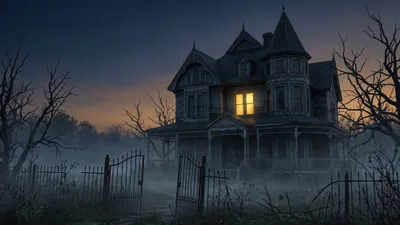
What separates folk horror from gothic horror or general horror fiction is its relationship with place. Gothic horror confines you inside a crumbling manor. Folk horror leads you out into the open — into fields, forests, and stone circles — where the sky is vast and there is nowhere to hide.
How Does the Folk Horror Chain Work?
Scholar Adam Scovell identified a framework called the folk horror chain that defines the genre’s structure. Every great folk horror story follows this four-link progression:
Landscape → Isolation → Skewed Morals → The Happening
1. Landscape
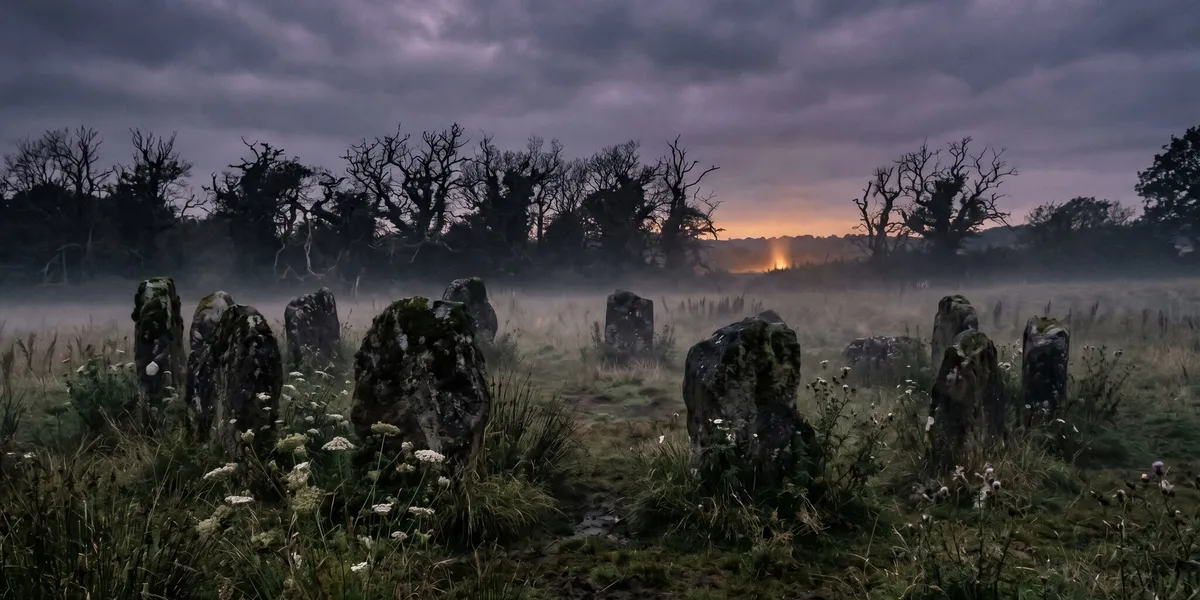
The story begins with a specific, deeply characterized setting. This is not generic “countryside.” The landscape carries history, memory, and a sense of watchfulness. Ancient burial mounds, standing stones, overgrown footpaths, tidal islands — the land itself is thick with meaning.
In folk horror, landscape is never mere scene-setting. It is a topography that shapes the psychology of everyone who lives within it.
2. Isolation
The landscape creates isolation — physical, social, and psychological. Your characters are cut off from the modern world, from help, from familiar frameworks of understanding. A remote village with one road in and out. An island accessible only at low tide. A forest so dense that GPS signals fail.
This isolation isn’t just about geography. It’s about being severed from the systems and institutions that make modern life feel safe.
3. Skewed Morals
Isolation breeds communities with belief systems that have evolved independently of mainstream morality. These aren’t evil people — they’re people whose values were shaped by centuries of living according to rules the outsider doesn’t understand. Sacrifice makes sense when the harvest depends on it. Silence makes sense when the old gods are listening.
4. The Happening
The chain culminates in a ritual, sacrifice, or confrontation that the entire story has been building toward. In The Wicker Man, it’s the burning of the wicker man. In Shirley Jackson’s The Lottery, it’s the stoning. The happening feels both shocking and inevitable — because the landscape, isolation, and moral framework made it the only possible conclusion.
Use this chain as your structural skeleton. Every scene should be tightening one of these four links.
How Do You Use Landscape as a Character?
In folk horror, the landscape is not a backdrop. It is the most important character in your story. The land watches. The land remembers. The land demands.
Here’s how to write landscape that carries this weight:
Layer sensory detail with emotional charge. Don’t just describe what the moor looks like. Describe what it feels like to stand in it — the wet wind that finds gaps in your clothing, the way the ground gives slightly underfoot as if something is breathing beneath the peat.
Give the land a history. Mention the barrow that local farmers plow around but never over. Reference the creek where no cattle will drink. Your characters may not know why these taboos exist, but the reader should sense that the land has rules.
Use seasons and weather as mood architecture. Folk horror thrives in transitional seasons — late autumn when the fields are stripped bare, early spring when the ground is thawing and releasing what was buried. Rain, fog, and failing light are your allies.
Make the landscape resist the protagonist. Paths loop back on themselves. Landmarks look different from new angles. The GPS loses signal. The landscape doesn’t want the outsider to leave — or to find what they’re looking for.
For more on building immersive settings, see our guide on worldbuilding tips.
Why Does the Outsider Archetype Matter?
Nearly every folk horror story uses the same structural device: an outsider enters a closed community and gradually discovers its secrets. This archetype is essential because the outsider serves as the reader’s proxy.
The outsider is rational. They come from the modern world with modern assumptions. They expect logic, law, and individual autonomy. These expectations will be systematically dismantled.
The outsider is curious. They investigate. They ask questions. They notice things that the locals treat as perfectly normal — the symbols carved into doorframes, the children’s rhyme that sounds like a prayer, the way everyone falls silent when a certain name is mentioned.
The outsider is doomed. This is perhaps the hardest truth of folk horror. The outsider almost never wins. They are absorbed, sacrificed, or broken. Their rationality is no defense against a community that has survived for centuries by following rules the outsider refuses to accept.
To write a compelling outsider protagonist, give them a personal reason for entering the community — not just idle curiosity. Perhaps they’re researching their family history. Perhaps they’re a teacher assigned to a rural school. Perhaps they’ve inherited a cottage from an estranged relative. The stronger their reason for staying, the more tension you generate when they realize they should leave.
This archetype connects to the unreliable narrator tradition — your outsider’s rationalist perspective is itself a kind of unreliability, because it blinds them to what’s actually happening.
How Do You Build Ritualistic Dread?
Folk horror doesn’t rely on jump scares or sudden violence. Its dread is slow, cumulative, and ritualistic. You are building a sense that something terrible is approaching on a schedule — and that everyone except your protagonist knows exactly when it will arrive.
Embed ritual into daily life. The community’s strange practices shouldn’t be hidden. They should be visible, casual, and unsettling precisely because no one treats them as unusual. A neighbor leaves a plate of milk on a standing stone every evening. Children play a game that mimics a sacrifice. The baker marks each loaf with a symbol before it enters the oven.
Use the calendar as a countdown. Folk horror often builds toward a seasonal event — a harvest festival, a solstice celebration, a saint’s day with pre-Christian roots. Establish this event early and let every scene move closer to it. The reader should feel the date approaching like a tide.
Layer clues, not reveals. Don’t save all your revelations for the climax. Instead, let your protagonist discover fragments — a phrase in a local history book, a pattern in the church’s stained glass, a photograph from a previous festival that shows something that shouldn’t be there. Each fragment should raise more questions than it answers.
Let the community be welcoming. This is counterintuitive but essential. The most effective folk horror communities aren’t overtly hostile. They’re warm, generous, and eager to include the outsider. The horror comes from realizing that this warmth is part of the ritual — the outsider isn’t being befriended, they’re being prepared.
For techniques on building this kind of escalating tension, check out our guide on how to write suspense and the power of foreshadowing.
What Role Does Folklore Play in Folk Horror?
Folklore is the engine of folk horror. It provides the belief system that justifies the community’s actions and gives the landscape its supernatural charge. But how you use folklore matters enormously.
Research real folklore traditions. The best folk horror is grounded in actual folk customs, legends, and superstitions. The Green Man, the Wild Hunt, corn dollies, wassailing, the Beltane fires, well dressing, sin-eating — these traditions are rich, strange, and already carry centuries of accumulated meaning.
Blend and recombine. You don’t need to faithfully reproduce a specific tradition. Take elements from multiple sources and weave them into something that feels authentic but isn’t directly traceable. This gives you creative freedom while maintaining the texture of real folklore.
Let folklore exist in fragments. Real folk traditions aren’t systematic theologies. They’re contradictory, incomplete, and layered with centuries of reinterpretation. Your fictional folklore should have the same quality — partial stories, competing versions, gaps where knowledge was lost.
Use children’s games and nursery rhymes. Some of the most unsettling moments in folk horror come from children’s songs that encode dark truths. “Ring Around the Rosie” is the classic example (even if the plague origin is disputed). Write a children’s rhyme that sounds innocent until the protagonist understands what the words actually mean.
Avoid over-explaining. The moment you provide a complete, logical explanation for the supernatural system, you lose the dread. Folk horror works because the audience, like the protagonist, never fully understands the rules. Leave gaps. Leave mysteries. Let the reader fill them with their own fears.
How Do You Write an Effective Folk Horror Setting?
While British countryside dominates the genre’s history, folk horror can work in any rural or isolated landscape. Here are settings beyond the classic English village:
| Setting | Folklore Source | Isolation Type |
|---|---|---|
| Appalachian hollow | Mountain folk magic, haint tales | Geographic — mountains, single road |
| Scandinavian island | Norse mythology, midsommar traditions | Maritime — weather-dependent access |
| Japanese mountain village | Yōkai legends, Shinto rituals | Cultural and geographic |
| Australian outback | Aboriginal Dreamtime, colonial guilt | Vast emptiness, distance from help |
| Louisiana bayou | Voodoo, Cajun folk traditions | Swamp terrain, waterway navigation |
| Irish bog | Celtic mythology, fairy forts | Treacherous ground, fog |
| Mexican rural town | Día de los Muertos, Aztec echoes | Community insularity, cartel territory |
The key is that your chosen landscape must have its own folklore tradition — real or invented — that the community has internalized over generations.
For more on crafting these kinds of atmospheric settings, explore our full guide to world building.
What Are Common Mistakes in Folk Horror Writing?
Even experienced horror writers stumble when attempting folk horror. Avoid these pitfalls:
- Making the community cartoonishly evil. Folk horror communities aren’t cults led by a cackling villain. They’re ordinary people following traditions they believe are necessary. The horror is in the normalcy, not the villainy. If you need help with nuanced antagonists, see how to write a villain with real depth.
- Rushing to the horror. Folk horror is a slow burn. If your protagonist discovers the dark secret in chapter two, you’ve skipped the dread-building that makes folk horror effective. Spend time in the landscape. Let the atmosphere do the work.
- Ignoring the “folk” in folk horror. A story set in the countryside with a monster isn’t folk horror. The horror must emerge from folk traditions, communal beliefs, and the relationship between people and land. Without folklore, you’re writing rural horror — a different thing entirely.
- Over-explaining the supernatural. If your story includes a scene where a character delivers a lecture on exactly how the magic works and why, you’ve broken the spell. Folk horror thrives on ambiguity and partial understanding.
- Neglecting sensory writing. Folk horror demands show-don’t-tell writing. The reader needs to smell the wet earth, hear the distant singing, feel the cold of the standing stone beneath their palm. Abstract descriptions of “a creepy feeling” will not suffice.
How Can AI Help You Write Folk Horror?
AI writing tools can accelerate your folk horror process — especially for research-heavy tasks like building folklore systems and developing atmospheric descriptions.
Our Pick — Chapter
Chapter’s AI writing assistant helps you draft folk horror novels with consistent atmosphere and pacing. Feed it your folklore system and setting details, and it generates prose that maintains your story’s unsettling tone across an entire manuscript.
Best for: Writing full-length folk horror novels with consistent voice and atmosphere Pricing: $97 one time, 2 books included (fiction or nonfiction), 30-day money-back guarantee Why we built it: Over 10,000 authors have used Chapter to write books — including genre fiction where maintaining tone across 80,000 words is the hardest part.
AI is particularly useful for folk horror in these ways:
- Generating folklore fragments — Ask AI to create nursery rhymes, local legends, and folk customs based on a region and time period you specify
- Maintaining atmospheric consistency — Folk horror’s slow-burn pacing demands that every scene carries the same tonal weight, which is difficult to sustain over a full novel
- Research acceleration — Use AI to explore real-world folklore traditions from regions you want to set your story in
For more AI-assisted horror tools, check out our AI horror story generator roundup.
What Are the Best Folk Horror Books to Study?
Reading widely in the genre is the fastest way to internalize folk horror’s rhythms. Here are essential texts, grouped by what each teaches:
For landscape as character:
- The Willows by Algernon Blackwood — a novella where a river island becomes increasingly hostile
- Harvest by Jim Crace — a village’s way of life collapses when outsiders arrive
For the outsider archetype:
- The Wicker Man (novelization by Robin Hardy and Anthony Shaffer) — the definitive outsider-enters-community story
- The Ritual by Adam Nevill — a hiking trip in Scandinavian wilderness becomes a nightmare
For ritualistic dread:
- The Lottery by Shirley Jackson — the gold standard for hidden-in-plain-sight horror
- Midsommar (screenplay by Ari Aster) — a master class in daylight horror and welcoming communities
For folklore as engine:
- The Owl Service by Alan Garner — Welsh mythology bleeds into modern life
- Wake by Shelley Burr — Australian outback folk horror with a procedural twist
For atmosphere and prose style:
- The Loney by Andrew Michael Hurley — a pilgrimage to a desolate stretch of English coastline
- Starve Acre by Andrew Michael Hurley — grief and archaeology unearth something ancient
Study how these authors handle pacing. Notice how long they wait before anything overtly horrifying happens. The patience is the craft.
How Long Should a Folk Horror Story Be?
Folk horror works at multiple lengths, but each demands a different approach. A folk horror short story (3,000-8,000 words) needs to establish landscape and community quickly — often through a single, vivid scene — and reach the happening within a compressed timeline.
A folk horror novella (20,000-40,000 words) is arguably the genre’s sweet spot. You have enough space to build the folk horror chain methodically without the pacing challenges of a full novel.
A folk horror novel (60,000-90,000 words) requires subplot architecture. The outsider needs a personal story — a relationship, a professional goal, a psychological wound — that the community’s traditions gradually subsume.
If you’re exploring horror story ideas with a twist, folk horror offers natural twist opportunities: the welcoming host is the high priest, the “abandoned” ritual site is still active, the protagonist’s family connection to the village is darker than they knew.
Can You Write Folk Horror Set in a City?
Folk horror can work in urban settings, but it requires adaptation. The essential elements — isolated community, deep-rooted traditions, landscape with agency, and ritualistic culmination — must all be present, even without literal countryside.
Urban folk horror might feature a housing estate built on a former plague pit, a neighborhood whose residents follow traditions from a demolished village, or a subway system where maintenance workers observe rituals to keep something underground quiet.
The film Candyman (1992) is a landmark of urban folk horror — a housing project where folklore and communal belief create a supernatural entity. Ben Wheatley’s Kill List blends folk horror with urban crime thriller.
The key question is whether the horror emerges from folk traditions and communal belief rather than from an individual antagonist or random supernatural event. If it does, it qualifies — regardless of zip code.
What Makes Folk Horror Different from Gothic Horror?
Folk horror and gothic horror share DNA but diverge in critical ways. Understanding the difference sharpens your writing in both genres.
| Element | Folk Horror | Gothic Horror |
|---|---|---|
| Setting | Open landscapes — fields, forests, moors | Enclosed spaces — castles, manors, crypts |
| Source of dread | Community beliefs and rituals | Individual psychology and family secrets |
| Antagonist | The collective — an entire community | The individual — a mad aristocrat, a ghost |
| Time orientation | Cyclical — tied to seasons and calendars | Linear — haunted by a specific past event |
| Protagonist’s role | Outsider entering a closed world | Heir, prisoner, or investigator |
| Resolution | Absorption or sacrifice (rarely escape) | Revelation of the secret (sometimes escape) |
Many stories blend both traditions — southern gothic fiction often incorporates folk horror elements, and gothic novels set in rural areas frequently cross the line. Use the comparison table to identify which tradition your story leans toward, then commit to its conventions.
FAQ
What is folk horror in simple terms?
Folk horror is a subgenre of horror rooted in rural settings, ancient folklore, and isolated communities with belief systems that predate modern society. Stories follow an outsider who discovers that the community’s traditions involve dark rituals or sacrifices justified by centuries-old customs tied to the land.
What are the key elements of folk horror?
The key elements of folk horror follow Adam Scovell’s folk horror chain: landscape (a rural, historically charged setting), isolation (physical and social separation from modernity), skewed morals (a community with pre-modern belief systems), and the happening (a ritual or sacrifice that the entire story builds toward).
How is folk horror different from cosmic horror?
Folk horror draws its terror from human communities and their ancient traditions, rooted in specific landscapes and real-world folklore. Cosmic horror, by contrast, centers on incomprehensible alien entities that dwarf human significance. Folk horror is about what your neighbors believe; cosmic horror is about what exists beyond human understanding entirely.
Can you write folk horror without supernatural elements?
You can absolutely write folk horror without any supernatural elements. Shirley Jackson’s The Lottery contains nothing supernatural — the horror comes entirely from a community’s willingness to follow a violent tradition. The key requirement is communal belief and ritual, not actual magic. Whether the old gods are real matters less than the fact that the community acts as if they are.
What are the best folk horror movies for writers to study?
The best folk horror films for writers to study include The Wicker Man (1973) for the outsider archetype, Midsommar (2019) for daylight dread and welcoming-community horror, The Witch (2015) for historical folk horror and period dialogue, and Kill List (2011) for blending folk horror with modern thriller structure. Each demonstrates different approaches to pacing, revelation, and the folk horror chain.